Choosing the right color for cabinet doors is an important part of kitchen and interior design. Cabinet doors occupy a large visual area, so their colors can influence the overall atmosphere, perceived space, and coordination of the room. However, many homeowners find this decision difficult. Solid colors may seem too plain, while bright or highly contrasting combinations can feel overwhelming.
The key is to find a balance between personal preferences, interior style, lighting conditions, and the colors of surrounding materials. With a wide range of finishes available, PVC decorative film provides a practical way to create different cabinet door appearances, from understated solid colors to realistic wood grain and marble patterns.
Before choosing a cabinet door color, consider the design style of the entire room. Cabinet doors should complement the flooring, countertops, wall colors, and other furniture rather than appear as an isolated design element.
For a modern minimalist kitchen, white, light gray, beige, and other neutral shades are reliable options. They create a clean appearance and work well with simple cabinet structures. For a warmer atmosphere, cream, warm white, and natural wood grain finishes can make the space feel more welcoming.
If the interior features industrial or contemporary elements, darker shades such as charcoal gray, deep brown, and matte black may create a stronger visual effect. However, dark cabinet doors generally work better when balanced with lighter walls, countertops, or flooring.
The size of the kitchen and the amount of natural light should also influence cabinet color selection.
In a small kitchen, light-colored cabinet doors can help create a more open and spacious visual impression. White, light beige, pale gray, and subtle wood grain patterns are especially suitable for compact spaces. They reflect more light and reduce the visual heaviness of large cabinet surfaces.
For larger kitchens, homeowners have more freedom to experiment with deeper colors and contrasting combinations. Navy blue, dark green, walnut brown, and other saturated tones can add depth and character without making the room feel crowded.
Lighting is equally important. A color may appear different under natural daylight, warm indoor lighting, and cool LED lighting. Before making a final decision, it is helpful to examine a physical film sample in the actual room or under lighting conditions similar to those in the finished space.
The best cabinet door color is not necessarily a single solid shade. Combining different finishes can create a more distinctive appearance while maintaining visual balance.
Neutral and solid colors
White, beige, gray, and soft earthy tones are suitable for homeowners who prefer a timeless appearance. These colors are relatively easy to coordinate with different countertop and flooring materials. A matte finish can create a softer, understated look, while a high-gloss finish may give cabinet doors a brighter and more contemporary appearance.
Natural wood grain patterns
Wood grain finishes bring warmth and natural visual texture to kitchen interiors. Light oak patterns can make a space feel bright and relaxed, while walnut and darker wood tones create a more sophisticated atmosphere. They are useful when homeowners want the appearance of natural wood without relying entirely on solid wood materials.
Marble-inspired patterns
Marble patterns offer another option for creating an elegant cabinet door appearance. White marble patterns with subtle gray veins can complement modern kitchens, while darker marble-inspired designs create stronger contrast. Compared with natural stone, decorative film is lighter and can be applied to suitable panel substrates without the weight and material costs associated with using actual stone.
Two-tone combinations
Using two colors can make cabinet designs more visually interesting. For example, upper cabinets can feature light beige or white film, while lower cabinets use walnut, gray, or dark green. The contrast helps define different areas without making the overall design feel overly complicated.
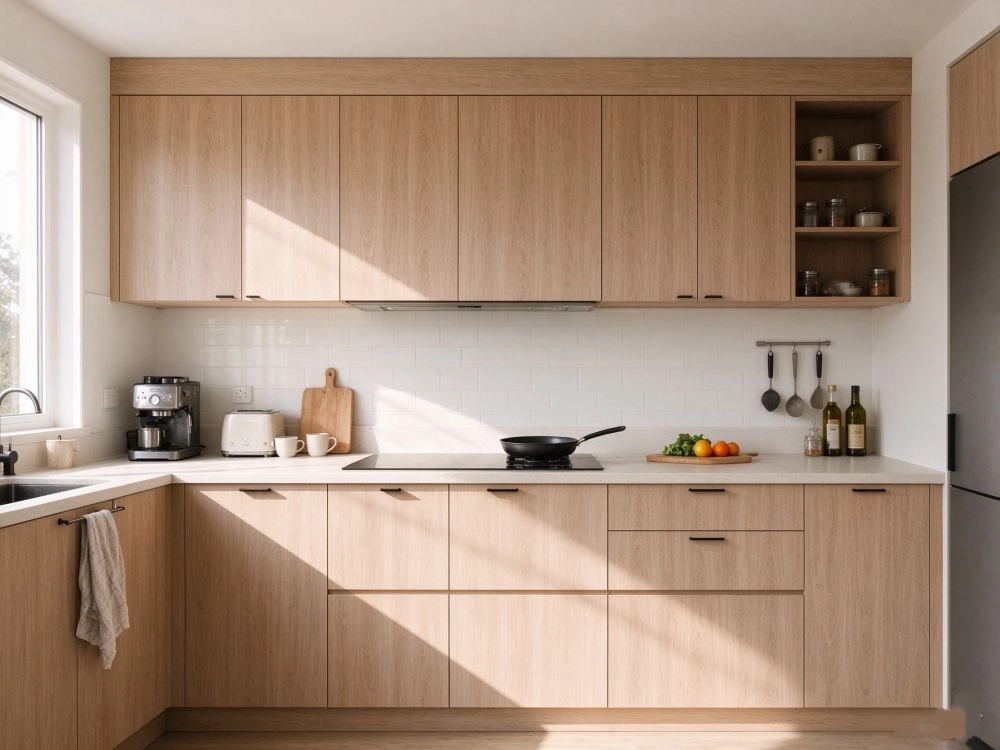
PVC decorative film gives cabinet manufacturers and designers considerable flexibility when creating different surface appearances. Through printing and surface finishing technologies, PVC film can reproduce wood grain, marble-inspired patterns, solid colors, and other decorative effects.
One advantage is the variety of available designs. Instead of being limited to the natural colors and patterns of wood or stone, designers can select finishes that better match a particular interior concept. Consistent film production can also help maintain a uniform appearance across multiple cabinet panels, although color matching should still be checked between production batches.
PVC decorative film can be processed using several methods according to the structure of the cabinet door or decorative component:
Flat lamination: Suitable for flat cabinet panels, providing a consistent decorative surface.
Vacuum membrane pressing: Allows the film to cover shaped surfaces and certain three-dimensional panel designs.
Profile wrapping: Used to cover suitable profiles and edges with a continuous decorative finish.
These processing methods make PVC film suitable for different cabinet designs, including flat panels, molded doors, and decorative profiles. However, the film grade, adhesive system, substrate, and processing parameters must be matched to the intended application.
Color and pattern are important, but cabinet door film also needs to meet practical requirements for everyday use. Kitchen surfaces may be exposed to moisture, temperature changes, cooking residues, and frequent cleaning.
Moisture and temperature resistance are worth checking, especially for cabinet doors installed near sinks, dishwashers, and cooking areas. The actual performance depends on the film formulation, adhesive, substrate, and quality of edge sealing. Product specifications should be reviewed before using a film in demanding environments.
Scratch and wear resistance also influence long-term appearance. Cabinet doors are frequently touched and cleaned, so a suitable surface finish can help reduce visible wear from ordinary use. However, resistance varies between products, and no decorative film should be assumed to be completely scratch-proof.
Color consistency and light stability are particularly important when multiple cabinet panels are installed together. Consistent production standards help reduce visible differences between panels. Resistance to fading or discoloration should be evaluated through the manufacturer's test data and recommended indoor-use conditions.
Environmental considerations should not be overlooked either. Buyers can review material declarations, safety documentation, and relevant compliance information to understand the film's composition and suitability for indoor furniture applications.
Choosing cabinet door colors does not have to mean deciding between plain solid shades and overly decorative patterns. By considering the room's size, lighting, interior style, and existing materials, homeowners can create a balanced color scheme that remains attractive over time.
PVC decorative film makes this process more flexible by offering a wide selection of colors, wood grain textures, and marble-inspired designs. Combined with suitable processing methods such as flat lamination, vacuum membrane pressing, and profile wrapping, it provides different ways to achieve a coordinated cabinet door appearance while meeting practical surface decoration requirements.